
Digital marketing services
- Home
- Services
- Digital marketing
Your customers are searching, comparing and making decisions online. Reaching them takes more than having a website or maintaining a social media presence. It requires a connected digital marketing strategy that puts your business in front of the right people and gives them a reason to take action.
IconicKloud provides digital marketing services in Australia to help businesses strengthen their online visibility, attract potential customers and create more opportunities for lead generation. By bringing together channels such as search engine optimisation, social media marketing, online advertising and content, we help businesses build a more purposeful digital presence.
Our focus is on connecting marketing activity with business objectives: acquiring relevant leads, improving customer engagement and supporting revenue growth.
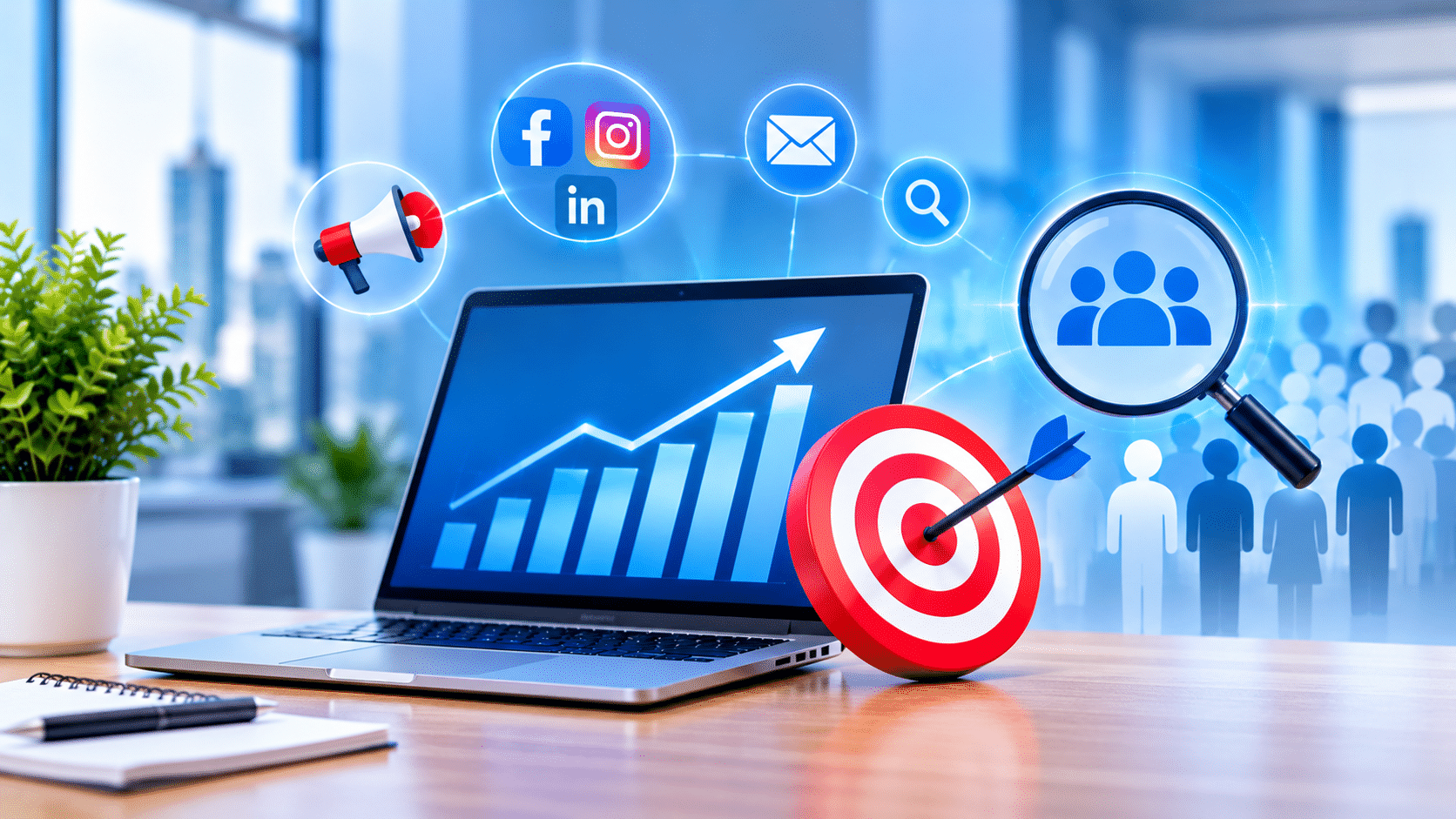
Digital marketing that works towards business growth
Every business wants more customers, but getting there requires an understanding of how people discover and interact with your brand.
Some potential customers find you through search engines. Others discover your business on social media, click an advertisement or visit your website after receiving a recommendation. Each interaction creates an opportunity to build interest and move them closer to making a decision.
A coordinated digital marketing strategy helps bring these touchpoints together. Instead of treating every channel as a separate activity, it considers how they can work towards shared objectives.
Whether you are looking to increase website traffic, promote a new service, improve lead generation or strengthen brand awareness, your marketing activities should have a clear role in achieving those goals.
Bringing your digital marketing channels together
Digital marketing is not a single service or platform. It is a combination of activities that help your business attract, engage and convert potential customers. IconicKloud can support different areas of your digital marketing based on your business needs and campaign objectives.
Search engine optimisation (SEO)
Improve how your website appears in relevant search results. SEO activities can include keyword research, on-page optimisation, technical improvements and content development to support organic visibility and attract relevant website visitors.
Social media marketing
Build your brand presence across relevant social platforms. Develop content, manage social media activity and support campaigns that encourage audience engagement, increase visibility and bring potential customers closer to your business.
Paid digital advertising
Reach selected audiences through online advertising campaigns. Depending on your campaign requirements, paid advertising can help promote services, increase website visits and generate enquiries through targeted digital channels.
Content marketing
Give potential customers useful reasons to discover and engage with your business. Informative articles, website content and other digital resources can communicate your expertise, answer audience questions and support different stages of the buying journey.
Website design and optimisation
Your website plays an important role in turning marketing traffic into business opportunities. A clear structure, responsive design, relevant information and accessible enquiry options can help visitors understand your offering and take the next step.
Campaign performance analysis
Understand how your marketing activities are performing. Review relevant indicators such as website traffic, search visibility, engagement, advertising performance and enquiries to identify opportunities for improvement.
A website receiving thousands of visits may still struggle to generate meaningful enquiries. The reason is simple: traffic only creates value when it reaches people who are relevant to your business.
An effective digital marketing strategy considers the quality and intent of the audience, not just the volume of visitors.
For example, a business offering specialised professional services may benefit more from reaching a smaller group of people actively looking for those services than from attracting large numbers of unrelated visitors.
This is why audience targeting, relevant keywords, useful content and well-planned campaigns matter. They help align marketing activity with the people most likely to have an interest in what your business offers.
We Focus on the right visitors

One business, different marketing priorities
Digital marketing requirements change depending on where a business is in its growth journey. A new business may need to establish visibility, while an established organisation may want to improve lead quality or get more value from existing marketing channels.
For businesses building their online presence
Establish a recognisable digital identity, develop a useful website and create opportunities for potential customers to discover your services.
For businesses looking to generate more enquiries
Focus on reaching relevant audiences, improving website journeys and connecting marketing campaigns with clear enquiry or conversion opportunities.
For businesses expanding into new markets
Explore suitable digital channels, audience segments and content approaches to introduce your brand to new potential customers.
For businesses improving existing marketing activity
Review current channels, assess performance and identify areas where your strategy, website or campaigns could work more effectively.
Your marketing funnel has gaps. Where are you losing potential customers?
A visitor discovering your business does not automatically become a customer. Between the first interaction and the final decision, there are several stages where interest can grow, stall or disappear.
Looking at the customer journey helps identify where your digital marketing efforts need attention.
Discovery – Are people finding your business?
Potential customers need opportunities to encounter your brand. Search engine visibility, social media activity, content and online advertising can help introduce your business to relevant audiences.
Interest – Are you giving them a reason to stay?
Once someone discovers your business, the information they find should be relevant to their needs. Useful content, clear service descriptions and consistent messaging can help build interest.
Consideration – Can they see why your business is worth considering?
Potential customers may compare providers, explore your website and look for information that helps them make an informed decision. Your digital presence should make your services, value and next steps easy to understand.
Conversion – Is taking the next step straightforward?
Unclear calls to action, complicated enquiry processes or poorly structured landing pages can create unnecessary friction. A well-considered website experience can make it easier for interested visitors to contact your business.
Improvement – What can you learn from the results?
Marketing performance data can reveal where visitors are coming from, which activities attract engagement and where potential customers may be dropping off. These insights can inform future decisions.
The goal is not simply to generate more traffic. It is to understand how your marketing contributes to the complete customer journey.
Why partner with IconicKloud?
Digital marketing requires more than individual campaigns. It involves understanding how your website, content, search visibility and online channels contribute to wider business objectives. IconicKloud takes a connected approach to help businesses make their digital marketing activity more purposeful.
A strategy built around your objectives
Your marketing priorities should guide the channels and activities you invest in. We consider your business requirements, target audience and growth objectives when shaping a digital marketing approach.
Connected digital marketing capabilities
Search visibility, social media, website experience and online campaigns can influence one another. Bringing these areas into a coordinated strategy helps create a more consistent experience for potential customers.
An emphasis on relevant leads
Generating attention is only one part of digital marketing. We focus on the importance of reaching relevant audiences and creating clear opportunities for people to enquire about your products or services.
Marketing informed by performance
Digital channels provide useful information about audience behaviour and campaign activity. Reviewing relevant performance indicators can help identify what deserves further attention and where adjustments may be beneficial.
A flexible approach as your business evolves
Your marketing requirements may change as your services, audience and business priorities develop. Your digital marketing strategy should be able to adapt rather than remain fixed around an outdated plan.
Frequently asked questions
Digital marketing services help businesses promote their products and services through online channels. They can include SEO, social media marketing, paid advertising, content marketing, website optimisation and campaign performance analysis.
Digital marketing helps businesses reach audiences online, improve brand visibility, communicate their offerings and create opportunities for customer enquiries. It also provides performance information that can help businesses understand how their marketing activities are working.
Digital marketing is the broader practice of promoting a business through online channels. Social media marketing is one part of it, focusing on platforms such as Facebook, Instagram, LinkedIn and TikTok. Digital marketing may also include SEO, online advertising, content marketing and website optimisation.
Digital marketing can attract potential customers through search engines, social platforms, online advertisements and useful content. When these activities direct relevant visitors to clear service pages and enquiry options, they can support lead generation.
The right channels depend on your audience, industry, budget and objectives. SEO may support long-term organic visibility, social media can help build engagement, and paid advertising can support targeted campaigns. A suitable strategy considers how these channels work together.
Timeframes vary by channel and campaign. Paid advertising can generate visibility soon after campaigns begin, while SEO and organic content generally require sustained work. Results also depend on competition, audience demand, website quality and campaign execution.
Success can be measured through relevant indicators such as website traffic, search rankings, engagement, advertising performance, enquiry volume and conversion rates. The most useful metrics are those connected to your business objectives.
Yes. Small businesses can use digital marketing to establish an online presence, reach relevant audiences and promote their services. The strategy should reflect available resources and focus on the channels most relevant to their customers.